31-day returns policy Free delivery & returns More than 100,000 unique rugs Since 1998: Your expert in hand-knotted oriental rugs

Flash Sale – 15% off
For a limited time only: find your next favourite rug and save 15% in our flash sale. Choose yours now and save!
Discount code: FLASH15

Nain Trading

How to stop a rug slipping: secure hand-knotted rugs safely

BY REZA, RUG EXPERT AT NAIN TRADING | PUBLISHED: 2026-06-11 | 5 MIN READ
A hand-knotted rug brings warmth, character and craftsmanship to a room – as long as it stays where it belongs. On smooth parquet, tiles or laminate, rugs can easily slip, develop ripples or curl up at the corners. This not only looks untidy but also poses a real safety risk, especially in homes with children, older people or pets. The good news is that almost any rug can be held securely in place with the right method. The key is to choose a solution that damages neither the rug nor the floor – particularly for hand-knotted rugs intended to last for decades.

Why do rugs slip in the first place?

Understanding the problem makes it easier to choose the right solution. Three factors usually work together: A smooth backing: The more finely a rug is knotted, the denser and more even its backing. Although this is a sign of quality, it creates little friction on sealed hard floors, allowing the rug to slide across the smooth surface. Pile direction: Every pile rug has a nap – the direction in which its fibres lean. With each step, this creates a slight pushing force in the same direction. Over several weeks, the rug can visibly shift across the room. Low weight: Small rugs and runners do not have enough weight to stay in place on their own. Large rugs that sit partly beneath furniture, on the other hand, rarely slip. Slipping is therefore not a fault in the rug, but a result of the combination of flooring, rug size and use – and these are the factors the solutions address.
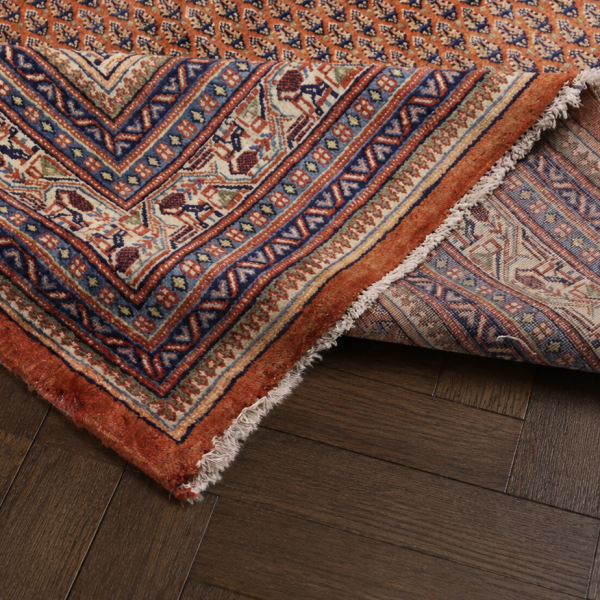
Traditional oriental rug on dark brown parquet flooring
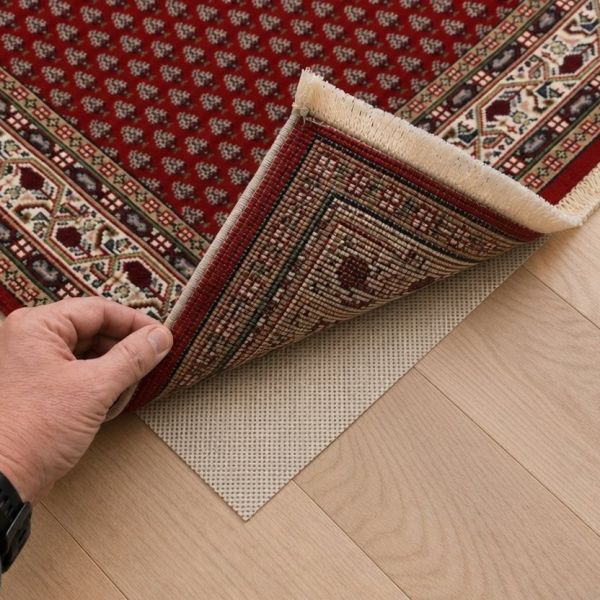
Non-slip underlay beneath a traditional oriental rug to prevent slipping

The best solution: the right non-slip rug underlay

For hand-knotted rugs, a non-slip underlay is the first choice – for good reason. It keeps the rug in place without adhesives or weights and can be removed at any time without leaving any residue. It also does more than prevent slipping: It cushions the knots against hard flooring, reducing wear on the back of the rug and noticeably extending its lifespan. It protects the floor from scratches caused by fine dirt particles that would otherwise rub between the rug and the parquet. It makes the rug softer and quieter underfoot and gives flat rugs a more substantial feel. It reduces creases and ripples by supporting the rug evenly.

Natural latex, felt and more – comparing rug underlay materials

Not every underlay is suitable for every floor. It is worth checking the material: Natural latex and rubber: The highest-quality option for smooth, hard floors. Natural latex grips reliably, is breathable and is considered safe for sealed parquet. Mesh structures also allow air to circulate. Non-woven underlays with a non-slip coating: Thin, flexible and versatile – a good choice when the rug needs to lie as flat as possible, for example beneath doors with limited clearance. Take care with low-cost PVC mats: Some contain plasticisers that can react with the parquet sealant over several months, leaving unsightly discolouration. Look for labels such as “suitable for parquet” or “plasticiser-free” – on an oiled or sealed wooden floor, this is essential, not a minor detail.

How to cut and position rug underlay correctly

  1. Clean the floor: Dust and fine dirt reduce the grip of any underlay. Before laying it down, wipe the floor and let it dry completely.
  2. Choose a smaller underlay: The underlay should sit about two to three centimetres inside the rug’s edges on all sides. This keeps it out of sight and allows the rug edges to lie flat, reducing the risk of tripping.
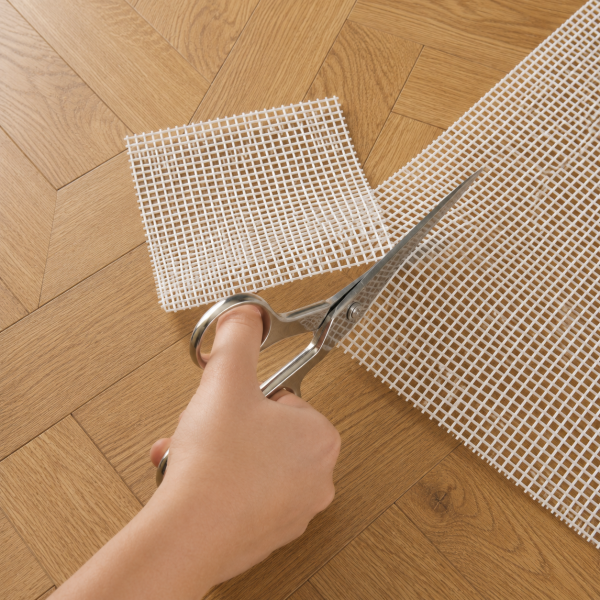
  3. Cut to size: Most underlays can be trimmed with household scissors. For larger rugs, several lengths of underlay can be laid side by side.
  4. Check regularly: Underlays lose their grip over the years. A quick check during seasonal cleaning is enough to see whether any adjustments or a replacement are needed.
Person cutting a non-slip rug underlay to size with scissors on a work surface.
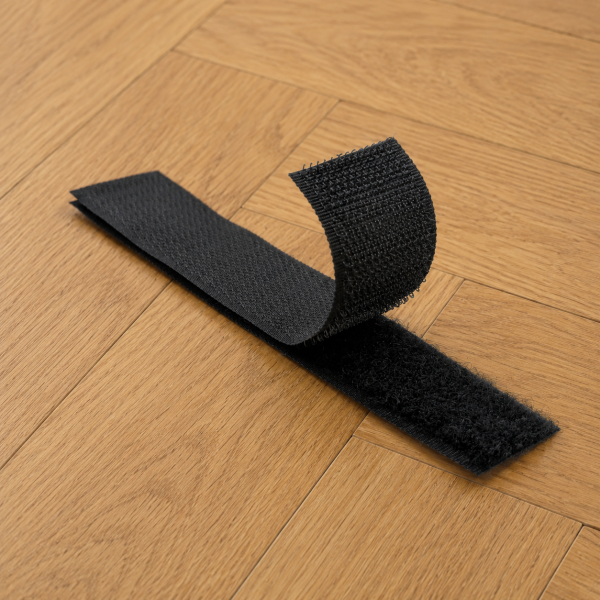
Hook-and-loop fastener on a wooden parquet floor.

Other methods at a glance – and their limitations

Corner grippers and hook-and-loop tape Self-adhesive corner grippers and hook-and-loop fasteners hold individual corners in place on the floor and prevent the edges from curling up. They work well on machine-made rugs with a sturdy backing. For hand-knotted rugs, caution is advisable: the adhesive sticks directly to the warp and weft threads on the back. Removing it can leave adhesive residue or damage individual threads – an avoidable risk for a piece intended to last for decades. Double-sided tape – why caution is needed with hand-knotted rugs Double-sided carpet tape is the most common recommendation online – and the most problematic for high-quality rugs. Over time, the adhesive bonds firmly to both the back of the rug and the floor surface. Removing it can leave residue on parquet flooring and cause rug threads to stick together or, in the worst case, tear out. If used at all, adhesive tape should be reserved for hard-wearing, machine-made rugs in high-traffic areas – not a one-of-a-kind, hand-knotted rug.

Special cases in practice

Rugs on carpet
A rug laid on carpet can also creep or bunch up – rather than slipping, it “shifts”. Special fleece underlays are designed for this: their underside grips the carpet pile, while the top holds the rug in place. A rubber mat intended for hard floors is not suitable here.

Underfloor heating
With underfloor heating, the thinner and more open the underlay, the better. Natural latex mesh allows heat to pass through almost unhindered. Thick, solid mats, on the other hand, can cause heat to build up. Hand-knotted wool rugs are generally compatible with underfloor heating – the right underlay helps keep them that way.

Runners in hallways and entrance halls
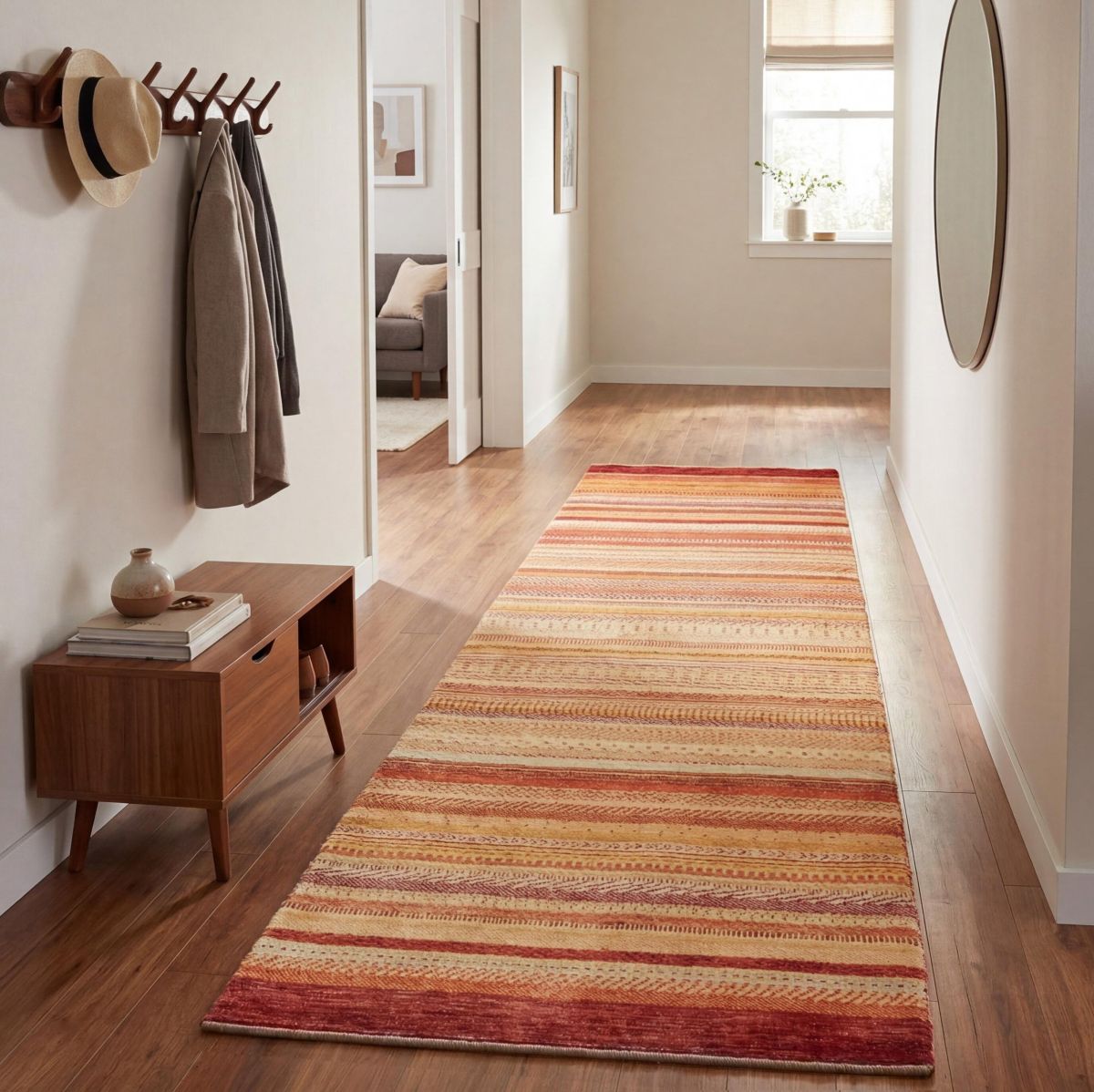
Runners are particularly prone to movement: they are narrow, lightweight and placed in the busiest part of the home. An anti-slip underlay covering the full area is practically essential here – corner grips alone cannot cope with the constant pressure from foot traffic. Natural latex strips cut to fit keep even long, narrow runners securely in place.

What to avoid

Some common home remedies do more harm than good:

  • Lines of hot glue or silicone on the back of a rug permanently bind the knots together, irreversibly reducing the value of a hand-knotted rug.
  • Anti-slip sprays and coatings cannot be removed from natural fibres once applied.
  • Underlays cut too large protrude beyond the rug’s edges and become a trip hazard themselves.
  • Cheap rubber mats with no material information can discolour parquet flooring. If in doubt, always check that they are suitable for your floor.

What to avoid

Some common DIY fixes do more harm than good:

  • Lines of hot glue or silicone on the back of a rug permanently bind the knots together, irreversibly reducing the value of a hand-knotted rug.
  • Anti-slip sprays and coatings cannot be removed from natural fibres once applied.
  • Underlays cut too large protrude beyond the rug and become a trip hazard themselves.
  • Cheap rubber mats with no material information can discolour parquet flooring. If in doubt, always check that they are suitable for your floor.

Keeping your rug securely in place helps preserve its value

A hand-knotted rug is made to last for decades, and many last for generations. A suitable underlay costs little but offers three kinds of protection: it helps protect people in the home from falls, the floor from scratches, and the rug itself from abrasion and damage caused by creasing. Regular care and occasional rotation help distribute exposure to light and foot traffic evenly, so you can enjoy your rug for years to come. This keeps a piece created through hundreds of hours of handwork exactly where it belongs – securely in place.

FAQ

How to stop a rug slipping straight away

The quickest, safest solution is a non-slip rug underlay cut to size. It takes just a few minutes to lay, grips all smooth floors and can be removed at any time without leaving any residue.

Can a non-slip rug underlay damage parquet flooring?

High-quality underlays made from natural latex or materials free from plasticisers will not damage parquet flooring. Take care with inexpensive PVC mats, as their plasticisers can discolour the floor’s sealant. Look for the label “suitable for parquet flooring”.

Can I use double-sided tape on a Persian rug?

This is not recommended. The adhesive can damage the back of a hand-knotted rug and leave residue on the floor. A non-slip rug underlay laid without adhesive serves the same purpose without these risks.

Should rug underlay be the same size as the rug?

About two to three centimetres smaller than the rug on each side. This keeps the underlay hidden and allows the rug edges to lie flat.

Do non-slip rug underlays work with underfloor heating?

Yes. Choose a thin, open-structured underlay, such as a natural latex mesh, so heat can pass freely into the room.

How to stop a rug slipping on carpet

Special non-woven underlays designed for carpeted floors can help here. They grip the carpet pile and hold the rug in place without weighing it down or using adhesive.

Why does my rug ripple even when it doesn’t slip?

Ripples often form because of uneven pressure, furniture standing on only one half of the rug, or changes in humidity. An underlay beneath the whole rug provides even support. Stubborn ripples will usually settle if you rotate the rug and leave it in its new position for a few days.

More inspiration

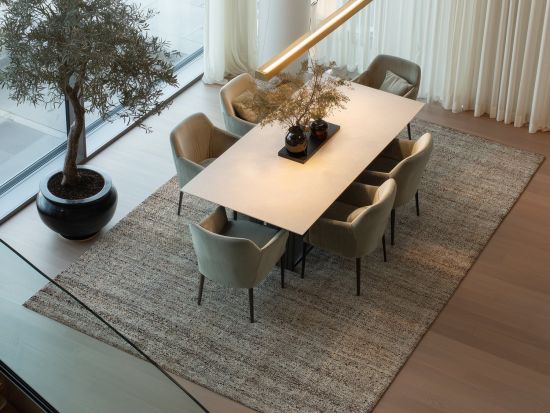
A subtle natural fibre rug under a wooden table.

Choosing the right rug size

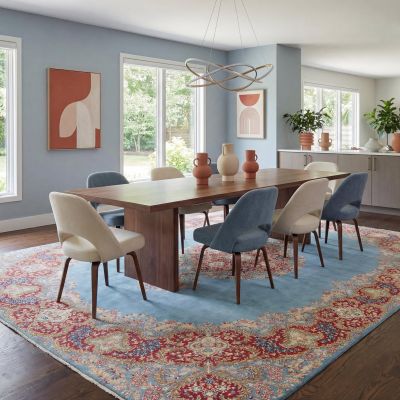
Hand-knotted rug in a harmoniously styled dining room with natural colours
A simple guide to harmonious rooms and choosing the right rug colour

Choosing the Right Rug Colour

Kitchen with wooden design and green carpet runner

Why a carpet runner is a good choice