31-day returns policy Free delivery & returns More than 100,000 unique rugs Since 1998: Your expert in hand-knotted oriental rugs

Flash Sale – 15% off
For a limited time only: find your next favourite rug and save 15% in our flash sale. Choose yours now and save!
Discount code: FLASH15

Nain Trading

Bathroom Blog

BY PERI, RUG EXPERT AT NAIN TRADING | PUBLISHED: 2026-09-09 | 6 MIN READ

Rugs in the bathroom: creating a welcoming, stylish space

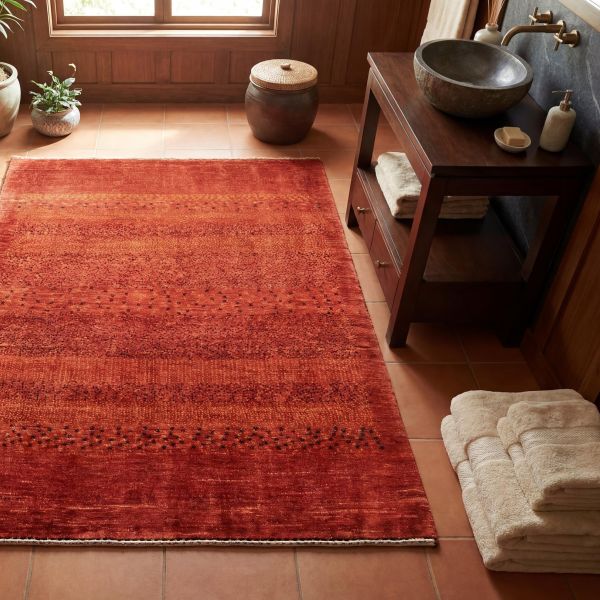
The bathroom has become more than a purely functional space. Natural materials, warm colours, plants and carefully chosen accessories are making bathrooms feel more inviting. A rug can make a noticeable difference: it softens the often cool feel of tiles and ceramics, brings colour and texture to the room and creates a comfortable, homely atmosphere.

But can you put a genuine oriental rug, a Gabbeh or a Berber rug in the bathroom? In principle, yes – though it depends on the rug, where you place it and, above all, how much moisture there is in the room.

Why a traditional rug transforms a bathroom

Bathrooms often feature smooth materials that can feel rather cool: tiles, natural stone, glass, metal and ceramic. Textiles offer an interesting contrast.

A rug adds a soft surface, colour and pattern to the room, which can change the overall feel of a bathroom. In large or minimally furnished bathrooms in particular, it can bring warmth and personality.

Hand-knotted rugs also have the advantage of feeling more distinctive than a standard bathroom accessory. Small variations in pattern and colour, together with traditional craftsmanship, give each piece its own character.

Bath mat or rug?

Bath mat

They serve different purposes. A traditional bath mat is designed primarily to absorb water, so it can be placed directly in front of the shower or bath. It should be easy to wash and quick to dry.

A real rug

A rug, by contrast, is primarily a decorative element. It should be placed where it will not regularly get soaked. If you need both functions, you can combine them: a practical bath mat in the area directly exposed to water and a decorative rug in a dry part of the bathroom.

Recommended rug types for the bathroom

Berber rugs

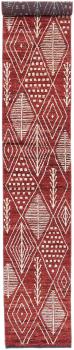
These deep-pile rugs made from thick natural wool are particularly soft, durable and comfortable. They suit bathrooms with a natural or Scandinavian style.

Qashqai rugs

These Persian nomadic rugs are hand-knotted, very durable and feature distinctive patterns. They are an excellent choice for bathrooms with character, where the rug can stand out as a focal point.

Kilims and flatweave rugs

Kilims can be an appealing choice for bathrooms. Their flat-woven structure gives them a light look and makes them easy to fit into narrower spaces.

Their typically geometric patterns also work particularly well in modern bathrooms. A Kilim can look especially good in front of a long vanity unit or used as a runner.

Loribaft rugs

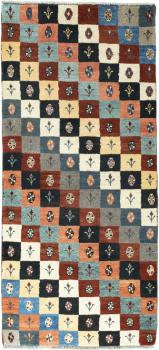
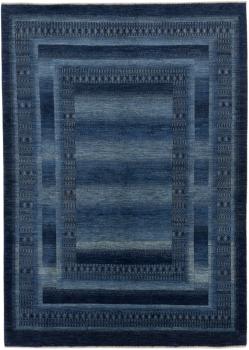
These modern interpretations of traditional Gabbeh Loribaft rugs are made from dense, high-quality wool. Their simple geometric patterns make them well suited to minimalist or modern bathrooms. They are durable and comfortable underfoot.

Gabbeh rugs

Gabbeh rugs are known for their soft, thick wool texture and simple designs in warm tones. They are well suited to bathrooms where comfort and a natural feel are the priority. Their deep pile feels particularly comfortable underfoot.

How to choose the right size and position

Even the most beautiful rug will look out of place if its size or position doesn’t suit the room. Before buying, it’s worth measuring the area where you plan to place it carefully.

In front of the basin

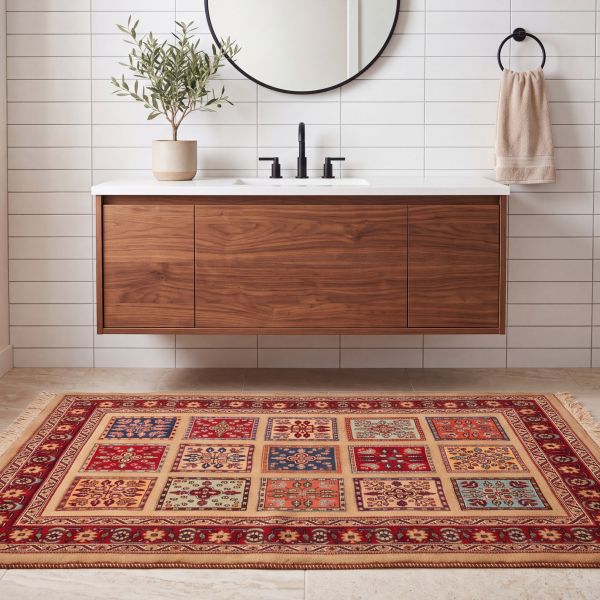
A runner or small rectangular rug is often a good choice in front of a washbasin. The important thing is that this area is not regularly exposed to large amounts of water.

In front of a double washbasin, a runner can visually link the two basins.

Beside the bath

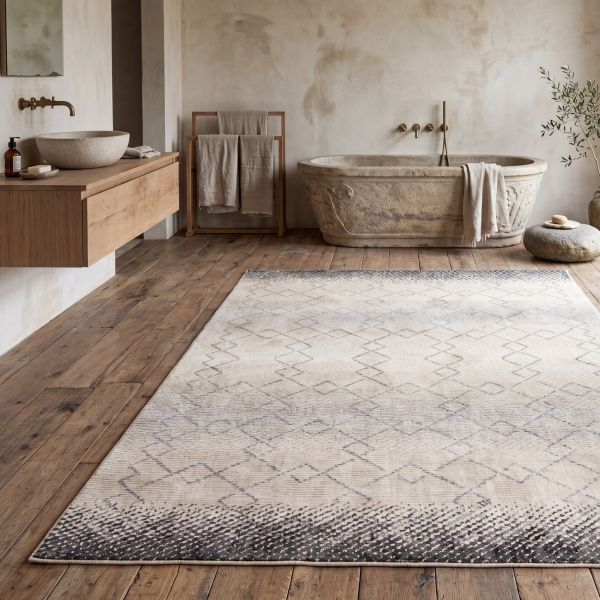
A rug can look particularly elegant alongside a freestanding bath. Rather than placing it right next to the bath, leave a little space to keep it away from the area most exposed to splashes.

Runners in long, narrow bathrooms

A runner works particularly well in narrow or long rooms. It can sit between the washbasin and the opposite wall, for example, helping to give the bathroom a more defined layout.

Rugs in small bathrooms

In small rooms, less is often more. A compact rug can be enough to add colour and warmth.

Make sure doors and drawers can open without catching on the rug, and leave enough clear space to walk comfortably.

Rugs in large bathrooms

Spacious bathrooms offer far more options. A rug can even help to visually separate different areas.

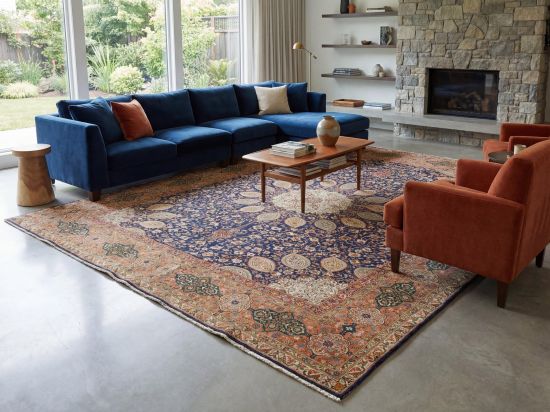
A larger oriental rug placed between a vanity unit, a bench and a freestanding bath can, for example, give the space an almost living-room feel.

Non-slip protection and underfloor heating

Safety matters on smooth bathroom tiles. A suitable non-slip rug underlay can help prevent the rug from slipping when you step onto it.

If you have underfloor heating, you should also check that both the rug and the underlay are suitable for use with it. Always follow the manufacturer’s instructions and care guidance for each.

Which rug suits your bathroom style?

Alongside the practical considerations, personal taste naturally plays a part.


Modern and minimalist

Clean lines and understated rug patterns can work particularly well in a modern bathroom. A simple Gabbeh rug, for example, adds a warm accent without competing with the rest of the décor. A single bold colour can also be very effective in an otherwise monochrome bathroom.


Scandinavian and natural

Light walls, wood, natural stone and muted colours pair well with cream, beige and natural tones. Berber rugs or understated wool rugs complement this aesthetic while adding warmth.


Boho and vintage

In this style, the rug can be a deliberate focal point. Warm reds and earthy tones, traditional motifs or a distinctive Kilim can instantly give a simple bathroom more personality.

Plants, wood and natural accessories enhance this effect.


Classic and luxurious

A finely patterned Persian rug can give a spacious bathroom a particularly elegant feel.

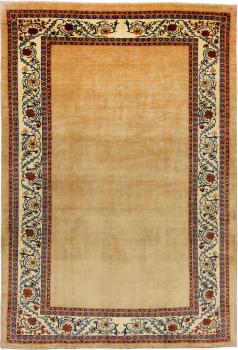
Nain, Tabriz and Isfahan rugs are especially striking thanks to their intricate patterns. For high-quality rugs like these, however, a dry position away from areas directly exposed to water is all the more important.

How to keep your bathroom rug looking good for longer

A bathroom places different demands on a rug than a living room or bedroom. A few simple habits can help keep it looking good for years to come.

Ventilate regularly

After a shower or bath, moisture in the air should be able to escape from the room as quickly as possible. Windows or an effective ventilation system are particularly helpful here.

Don’t overlook moisture

If water gets onto the rug, allow it to dry completely. A damp rug should not be left lying on the tiles for an extended period.

Vacuum regularly

Hair, dust and other small particles of dirt can build up in the bathroom too. Regular vacuuming, using a method suited to the rug’s material, helps keep it clean.

Treat stains gently

As a general rule, treat stains as soon as possible. Carefully blot up liquids rather than rubbing them into the fibres.

With hand-knotted oriental rugs in particular, avoid experimenting with harsh household cleaners. If in doubt, professional cleaning is the better choice.

Professional cleaning

Depending on how the rug is used, professional cleaning may be worthwhile after a while. For high-quality hand-knotted rugs in particular, the cleaning method should be suited to the material, colours and knotting.

How can you prevent damp and mould under a rug?

Moisture trapped between the rug and the floor cannot escape easily. A bathroom rug should therefore never be left on a wet floor for long periods.

Regular ventilation is essential. It is also a good idea to lift the rug occasionally and check both its underside and the floor beneath it. If the rug has been exposed to a lot of water, allow it to dry completely before putting it back in place.

Checklist: Is this rug suitable for my bathroom?

Before choosing a rug for your bathroom, it helps to ask a few simple questions
  • ✔Is the rug outside the area directly exposed to water?
  • ✔Does the chosen spot stay mostly dry during everyday use?
  • ✔Can the bathroom be well ventilated after a shower or bath?
  • ✔Can the rug dry completely if it gets damp?
  • ✔Is the material suitable for the intended location?
  • ✔Can a suitable non-slip underlay be used?
  • ✔Can doors, drawers and cupboards still be opened easily?
  • ✔Are the rug and underlay suitable for underfloor heating, if fitted?

A rug makes the bathroom feel like a living space

A rug can bring something to a bathroom that tiles and ceramics alone rarely achieve: warmth, personality and a welcoming, homely feel.

What matters is not just which rug you choose, but above all where and how you use it. In areas directly exposed to water, a traditional bath mat remains the more practical choice. In a dry, well-ventilated area,

a Gabbeh, Kilim, Berber or oriental rug can become a distinctive design feature.

By taking humidity, ventilation, material, placement and care into account, you can make the bathroom feel like a natural part of your living space – and choose a rug that is not only well placed for practical use, but also gives the room a character of its own.