31-day returns policy Free delivery & returns More than 100,000 unique rugs Since 1998: Your expert in hand-knotted oriental rugs

Black Weeks – Exclusive 20% off all rugs
Discover distinctive rugs for a home with character. Enjoy 20% off our entire rug collection during Black Weeks.
Discount code: BLACK20

Nain Trading

How to identify genuine oriental rugs – How to tell originals from imitations

BY REZA, RUG EXPERT AT NAIN TRADING | PUBLISHED: 2026-07-23 | 7 MIN READ

Oriental rugs have been among the world’s most renowned textile artworks for centuries. Their intricate patterns, high-quality materials and traditional craftsmanship make them a staple in many living spaces. At the same time, oriental designs are also highly popular in machine-made rugs. As a result, many people find it difficult to tell a genuine Oriental rug from an imitation.

If you are looking to buy an Oriental rug, it is therefore important to know what matters when assessing authenticity. It is not only the pattern or origin that plays a role. The knotting technique, the materials used, the workmanship and many small details also reveal whether it is a hand-knotted original or a machine-made alternative.

In this guide, you will learn which features distinguish a genuine Oriental rug, how to recognise hand-knotted rugs and what to look out for when buying.

What actually makes an oriental rug genuine?

A genuine oriental rug is not defined solely by its place of origin or pattern. What matters most is the traditional craftsmanship. Classic oriental rugs are hand-knotted and are made predominantly from natural materials such as virgin wool, cotton or silk. Every single knot is tied by hand, creating one-of-a-kind pieces.

By contrast, many rugs with oriental patterns are now machine-made. Although they are visually inspired by traditional designs, they differ significantly in their production, workmanship and often in their lifespan.

The authenticity of an oriental rug therefore results from the interplay of various characteristics. Only when materials, knotting technique, workmanship and origin are considered together can the quality of a rug be assessed reliably.

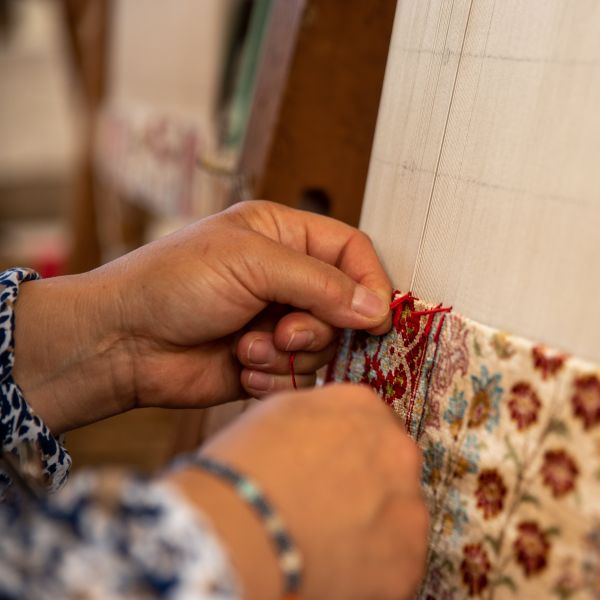
Craftswoman knots a beautiful oriental rug with great care.

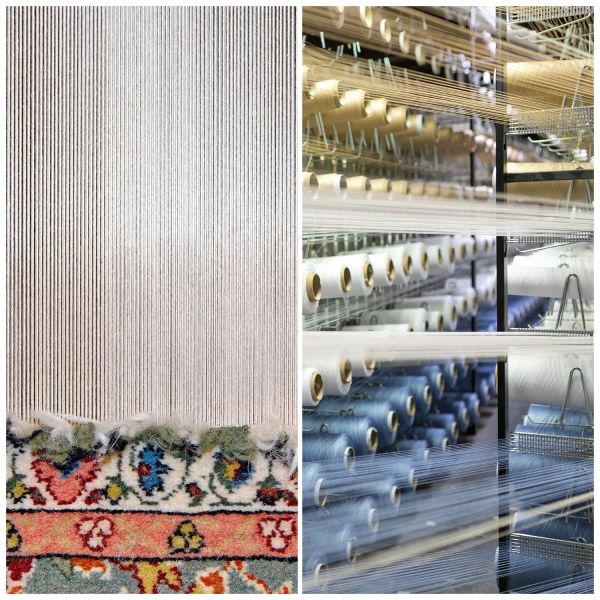
Collage combining the traditional hand-knotting technique and modern machine-made production of orie

The manufacturing technique: Handmade vs. machine-made

One of the clearest signs of an authentic oriental rug is whether it has been made by hand or by machine. Handcrafted rugs, known for their intricate craftsmanship, often feature small irregularities that make each piece unique. When examining an oriental rug, you should pay attention to the back of the rug. With a handmade oriental rug, the pattern is clearly visible on both the front and the back, indicating that the knots were tied by hand. Machine-made rugs, on the other hand, often have a stiff backing and a less detailed pattern. Hand-knotted oriental rugs also show slight variations in the size and position of the knots, as each knot is tied manually. If the design looks too perfect or the knots are identical, it is likely to be a machine-made rug.

Differences at a glance

Feature Hand-knotted oriental rug Machine-made rug
Production Knotted by hand Machine-made
Back Individual knots are visible Even weave with no visible knots
Fringes Part of the warp Often sewn on
Pattern Minor irregularities possible Almost perfectly even
Lifespan Often several decades or even generations Usually significantly shorter, depending on quality

None of these features should be assessed in isolation. Only the combination of production method, materials and workmanship allows a reliable assessment of the authenticity of an oriental rug.

How can you recognise a genuine oriental rug?

The authenticity of an oriental rug usually cannot be identified by a single feature alone. Rather, it is the combination of different characteristics that reveals how it was made and the quality of the piece. With a little attention, many differences can be recognised even without specialist knowledge.

In particular, the back, the fringes, the materials used and the workmanship provide important clues as to whether a rug was hand-knotted or machine-made.

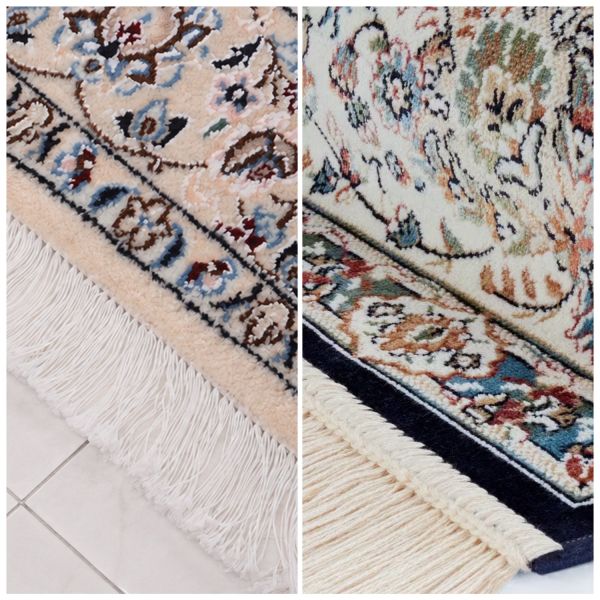
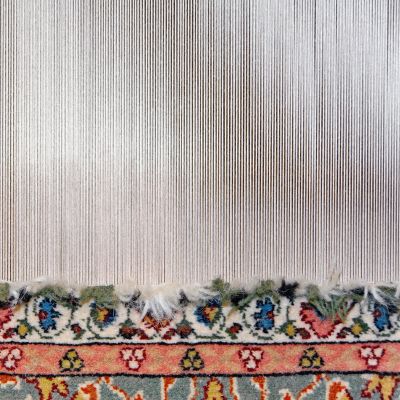
Collage comparing the fringes of a hand-knotted oriental rug and a mach

Check the fringes

The fringes also provide important clues about how a rug was made. In hand-knotted oriental rugs, they are part of the warp threads and are therefore firmly connected to the rug. They form the foundation on which the entire rug is knotted.

By contrast, on many machine-made rugs, fringes are only sewn or glued on afterwards. Although they may look similar at first glance, they differ significantly in the way they are made.

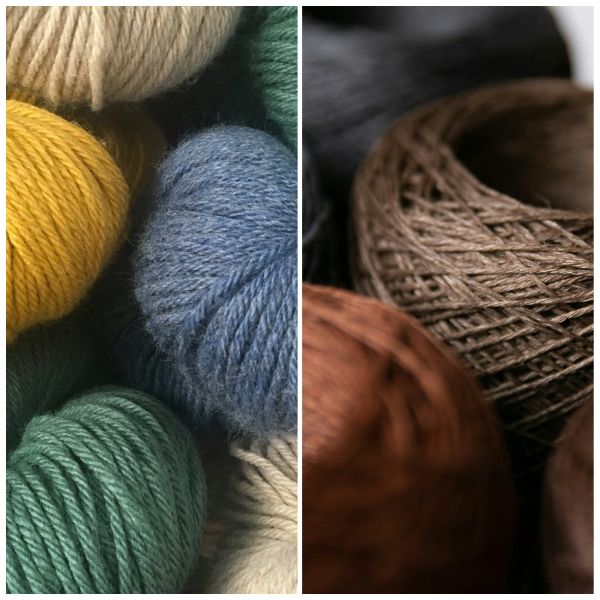
Collage showing natural, textured wool yarn alongside smooth synthetic yarn.

Pay attention to the materials

Traditional oriental rugs are predominantly made from natural materials such as virgin wool, cotton or silk. These materials feel pleasant to the touch, are durable and often develop a beautiful patina over time.

Machine-made rugs, on the other hand, are often made wholly or partly from synthetic fibres. While these can be easy to care for, they usually do not match the durability and natural character of high-quality natural materials.

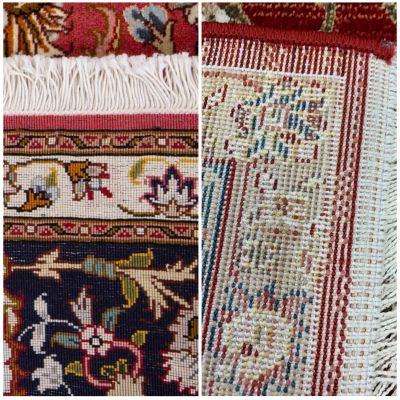
Reverse side of a hand-knotted oriental rug

View the back

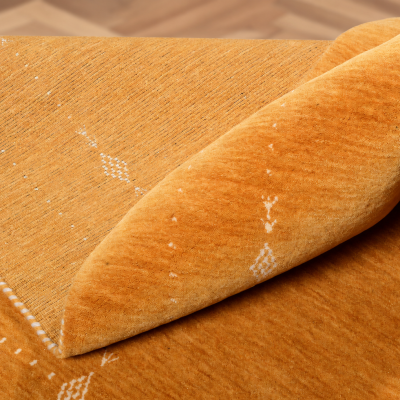
The back of a rug is one of the most reliable features when assessing its authenticity. In a hand-knotted oriental rug, the individual knots are clearly visible. The pattern appears on the back almost as clearly as on the front, although in reverse.

Machine-made rugs, on the other hand, often have a uniform woven structure or an additional backing layer, which means the individual knots are not visible. That is why it is always worth taking a look at the back when buying a rug.

Hand-knotted oriental rug with natural irregularities

Minor irregularities are not a defect

A hand-knotted oriental rug is made entirely by hand. This means that small variations in the pattern, spacing or shape of individual elements may occur. These subtle differences are typical of genuine craftsmanship and make every rug one of a kind.

Machine-made rugs, by contrast, usually appear completely uniform, as every step of the production process is automated. Absolute perfection can therefore even be a sign that a rug was machine-made.

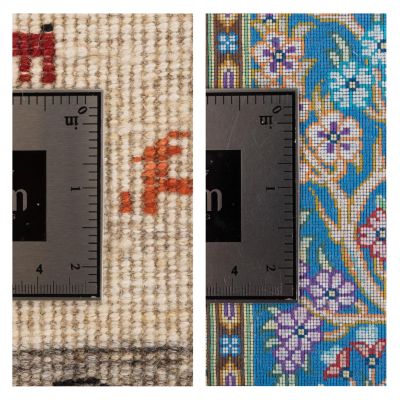
Collage comparing the knot density of two rugs

Assessing knot density correctly

Knot density is often regarded as a quality feature of an oriental rug. In principle, a higher number of knots per square metre allows for finer patterns and more detailed ornamentation. Nevertheless, knot density should never be considered in isolation.

Material quality, craftsmanship, origin and the experience of the weavers also play an important role. A high-quality oriental rug is always defined by the interplay of all these characteristics, and not solely by having the highest possible knot count.

What materials are used for genuine Oriental rugs?

The materials used are among the most important quality features of an oriental rug. They influence not only its appearance, but also its feel, durability and maintenance requirements. Traditionally, hand-knotted oriental rugs are made mainly from natural materials that have proven their worth over centuries.

Depending on origin, knotting tradition and intended use, different fibres are used. Each of them has its own characteristics and gives the rug an individual character.

Collage comparing the textures of natural wool, cotton and silk for the rug

Virgin wool

Virgin wool is the most commonly used material for hand-knotted oriental rugs. It is hard-wearing, elastic and pleasantly soft to the touch. At the same time, it has temperature-regulating properties and can absorb moisture without feeling damp.

Thanks to its natural lanolin content, virgin wool is also relatively dirt-repellent and is ideal for heavily used living areas. With proper care, wool rugs retain their beauty and functionality for many years.

Cotton

Cotton is often used for the warp and weft of an oriental rug. It provides stability and gives the rug its shape. Thanks to its high tear resistance, it forms the ideal foundation for the intricately knotted wool or silk pile.

Many high-quality oriental rugs combine virgin wool and cotton to bring together comfort and stability.

Natural silk

Natural silk is one of the finest materials used in rug making. It is distinguished by its delicate sheen, exceptional softness and high strength. Silk is often used especially in high-quality oriental rugs to highlight intricate patterns and particularly fine details.

Due to their more delicate structure, silk rugs or rugs containing silk are often used in living areas with lighter foot traffic, where their distinctive appearance can be shown to best effect.

Natural materials or synthetic fibres?

Natural materials offer numerous advantages. They feel pleasant to the touch, help regulate the indoor climate and often develop a distinctive patina over time. In addition, high-quality natural fibres can last for many decades when properly cared for.

Synthetic fibres may be easy to care for and cost-effective, but they generally do not offer the same durability, quality and natural appeal as virgin wool, cotton or silk. Especially in hand-knotted oriental rugs, natural materials are therefore among the most important indicators of quality.

Frequently Asked Questions about Genuine Oriental Rugs

Why does a new oriental rug sometimes smell?

A slight natural odour is completely normal with new hand-knotted oriental rugs. It usually comes from natural materials such as pure wool or cotton and will disappear after a short time with regular airing.

Can an oriental rug be restored?

Yes. High-quality hand-knotted oriental rugs can often be professionally restored. Damaged fringes, edges or individual knotted areas can be repaired by experienced specialists, which can significantly extend their lifespan.

Does a genuine Oriental rug lose value over time?

Not necessarily. Well-preserved hand-knotted oriental rugs are considered durable, high-quality products. Their value depends, among other things, on age, origin, condition, materials, rarity and craftsmanship.

Why do two hand-knotted rugs of the same design differ?

As each hand-knotted oriental rug is crafted by hand, slight variations in colour, proportions or details may occur. It is precisely these subtle differences that make every rug a one-of-a-kind piece.

Is there a certificate of authenticity for hand-knotted oriental rugs?

Many reputable specialist retailers supply hand-knotted oriental rugs with a certificate of authenticity. This often includes information about the origin, the materials used, the knotting technique and the rug’s dimensions.

Are hand-knotted oriental rugs sustainable?

Yes. Thanks to their long lifespan, the use of natural materials, and the possibility of professional restoration, hand-knotted oriental rugs are considered a particularly sustainable choice.

How should an oriental rug be stored?

If a rug is to be stored for a longer period, it should be rolled up and kept clean and dry. A well-ventilated room also helps protect it from moisture and pest infestation.

Can a hand-knotted oriental rug be inherited?

Yes. High-quality oriental rugs are often passed down through generations thanks to their durable craftsmanship and, with proper care, can last for many decades.

Further inspiration

Hand-knotted oriental rug is professionally cared for and cleaned

Carpet Care: The Complete Care Guide for Hand-Knotted and Hand-Woven Rugs

Traditional rug making
From Sheep to Carpet Art – How It’s Made Explained

Traditional rug making

Colourful children's room with a vibrant patchwork play mat
What to look out for

Rugs for Kids' Room