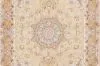
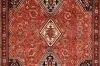
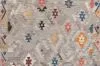
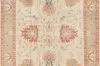
28 Years of Nain Trading – Extra 20% Off
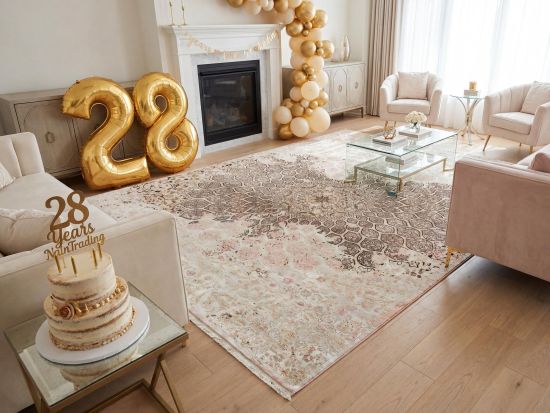
Celebrate 28 years of Nain Trading with us and enjoy an extra 20% off our entire range – including rugs already on sale.
Discount code: 28YEARS
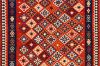
“Gabbeh” is a Persian word that literally means “raw” or “simple”. Rugs bearing this name originated in southern Iran and are among the earliest forms of hand-knotted rugs. They are characterised by simple patterns, bold colours and a dense wool pile.
Today, Gabbeh rugs come in many varieties: traditional, finely knotted, modern interpretations or machine-made.
The classic Persian Gabbeh is at the heart of the Gabbeh tradition. It originated among nomadic peoples in Iran, who knotted these rugs for their own use, working from memory and imagination rather than a set design. This creative freedom is reflected in every piece.
The knotting is deliberately coarse, with a deep, pleasantly soft pile. Typical motifs include simplified animals, trees, people and abstract symbols that tell stories from the weavers’ daily lives.
Colours range from rich red, blue and orange to natural earth tones.
The wool is untreated and often coloured with plant dyes, giving the rugs a distinctly natural look. A Persian Gabbeh is no off-the-shelf rug: its individual quirks give it plenty of character.
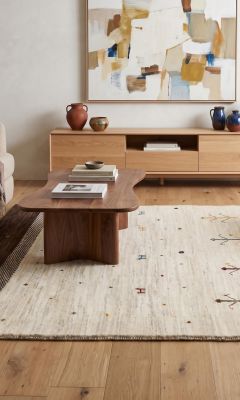
Tip : Ideal for living rooms or open-plan kitchen-living spaces where handcrafted warmth and individuality are welcome.
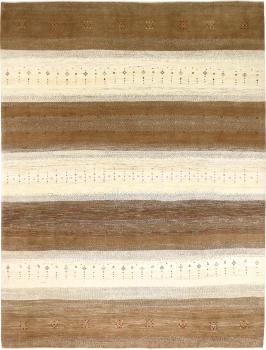
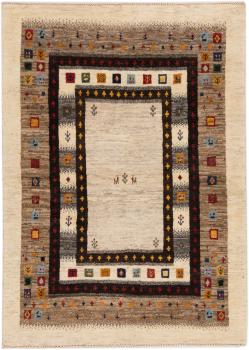
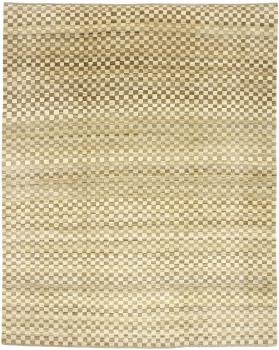
The Persian Gabbeh Loribaft is a more refined version of the classic Gabbeh. Made by the Lurs, a nomadic people in south-western Iran, it has a noticeably higher knot density.
This gives it a more structured, elegant appearance, with a slightly calmer overall feel. It often features large areas of subtly graded colour with occasional motifs, such as small animals, plants or stylised symbols.
The colours are muted, warm and harmonious: ochre, rust, olive or cream.
High-quality wool and precise knotting give the rug a denser, smoother feel. Despite its refinement, it retains a down-to-earth character, striking a balance between tradition and contemporary design.
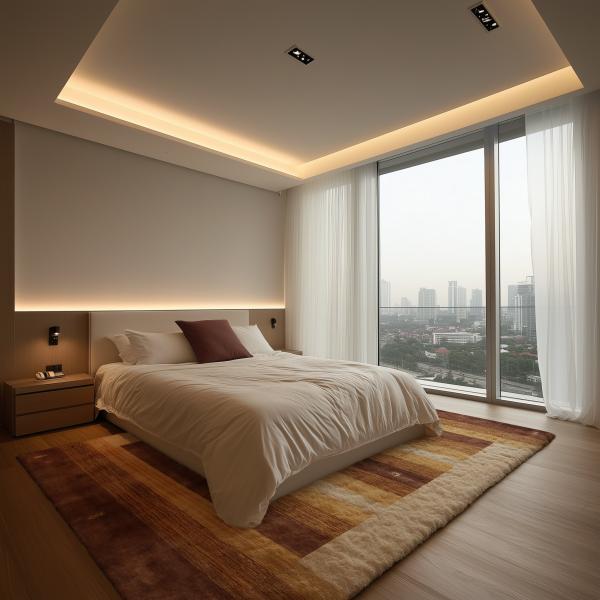
Tip : Well suited to bedrooms, reading areas or minimalist living rooms with a natural colour palette.
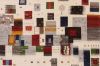
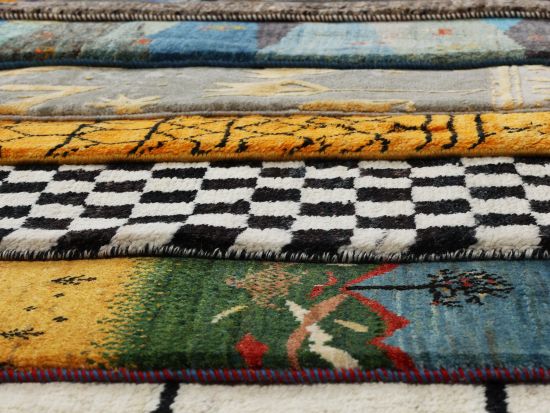
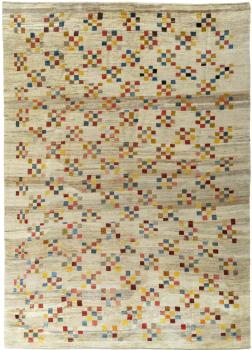
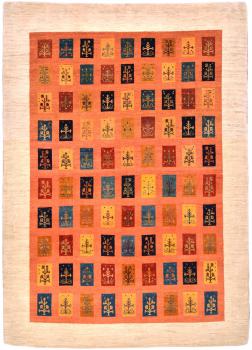
The nomadic Gabbeh is colourful, playful and spontaneous, much like the way of life it comes from. Nomadic tribes knot these rugs freely, often without a precise plan. The result is an expressive rug with irregular motifs, some with an almost childlike quality.
Typical motifs include animals, tents, plants and symbols that reflect the weavers’ daily lives or spiritual beliefs.
The colour palette is vibrant: yellow, blue, green and red alternate to create a cheerful overall effect. Coarse knotting and a thick pile give the rug a cosy feel.
Tip : Particularly well suited to children’s rooms, creative workspaces or living areas where individuality is important.
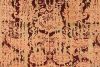
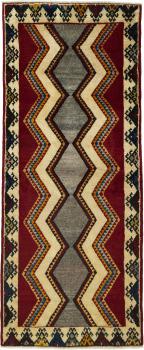
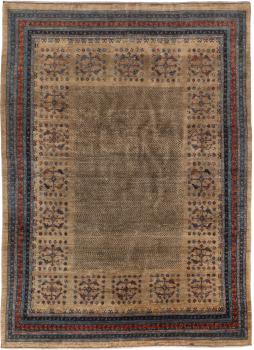
Persian Kashkuli Gabbeh rugs are among the finest Gabbehs.
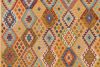
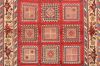
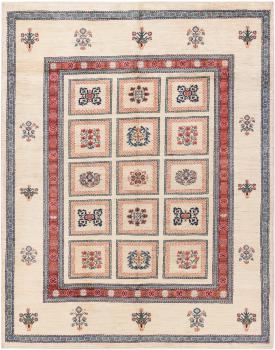
The Qashqai tribes who weave them use the finest wool and a very high knot density. The result is rugs with crisp, intricate patterns and rich colours. Traditional motifs such as diamonds, trees of life and lines are rendered in detail.
The palette is dominated by rich reds, deep blue and contrasting ivory.
Despite this refinement, each rug retains a rustic character. The combination of tradition, precision and quality materials makes the Kashkuli a durable, high-quality rug that retains its distinctive character even after decades.
Tip : Ideal for elegant reception rooms, formal living rooms or dining areas with high-quality furniture.
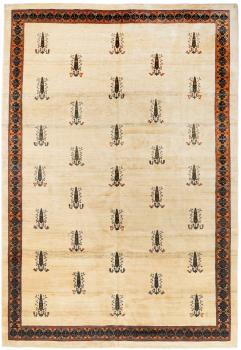
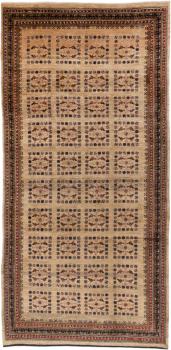
The Indo Gabbeh is the Indian version of the classic Gabbeh rug. Hand-knotted from good-quality virgin wool, it features a colourful yet ordered design. Traditional motifs such as stylised animals, trees and lines are interpreted with clearer shapes and greater symmetry.
The colour palette is bold but harmonious: red, beige, blue and green.
The wool often comes from India or New Zealand, and the pile is soft and durable. The Indo Gabbeh offers an authentic look, usually at a lower price.
Tip : Well suited to living rooms, children’s rooms or busy hallways.
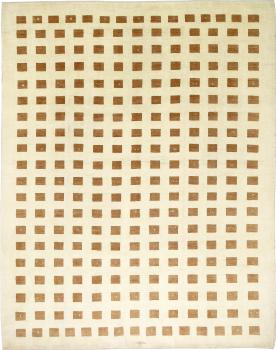
Indo Gabbeh Loribaft rugs combine Indian knotting craftsmanship with the Loribaft style.
This means finer knotting, a dense structure and understated patterns. Often, a single symbol appears against a plain background. The colours are usually earthy, sometimes pastel. The overall effect is refined without being intrusive. These rugs suit modern interiors as well as traditional furniture.
Tip : Ideal for simply furnished bedrooms or studies with an emphasis on clean lines.
These handwoven rugs take their design cues from Lori Gabbehs.
What does Gabbeh Loom mean?
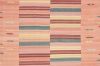
The term “loom” refers to the weaving technique: Loom Gabbehs are woven rather than knotted on traditional looms, often in places such as Bhadohi, India. This creates a particularly even, flat texture that stands up well to everyday use.
Clear geometric patterns, warm colours and an even pile are typical features. Weaving on a loom creates a stable, hard-wearing structure, ideal for everyday use.
The designs are deliberately simple, with no elaborate decoration. Terracotta, sand, grey and rust are the predominant colours.
Tip : Well suited to busy rooms such as dining rooms, hallways and family living areas.
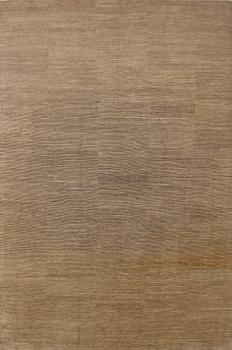
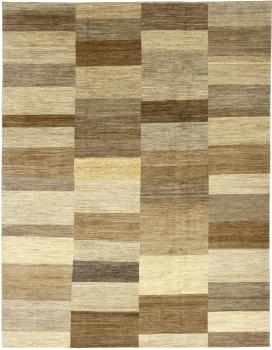
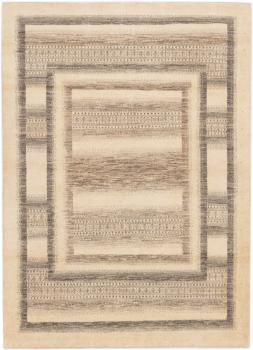
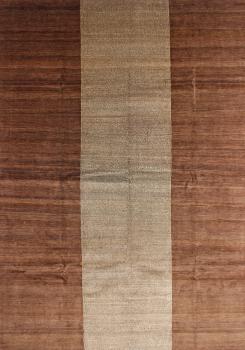
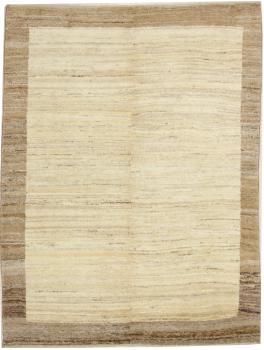
The Loom Gabbeh is a particularly understated yet characterful type of Gabbeh rug. Unlike heavily patterned designs, it often has no symbols at all, usually featuring a single colour or subtle tonal variations.
A lesser-known fact: Loom Gabbeh rugs often come from Bhadohi, a small town in northern India known as a centre for handwoven rugs. They are made by hand on traditional looms. The pile is low, even and firm, making the rug particularly easy to care for.
Its restrained design makes it a versatile choice for modern interiors with an understated look. The fine weave is especially effective in daylight: the interplay of light and texture creates depth without a prominent pattern.
Tip : Ideal for rented homes, offices, studies or hallways – anywhere that calls for an understated, robust rug that does not dominate the room.
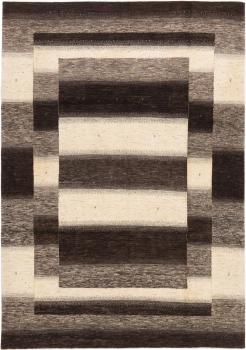
The Future Echo Gabbeh rugs take a contemporary approach to design.
Geometric shapes, graphic patterns and contrasts meet a robust Gabbeh construction. The designs are modern, often inspired by digital forms or architecture. The pile remains dense and the wool is of high quality.
With their graphic patterns, Future Echo rugs create distinctive accents in understated interiors.
Tip : A good choice for open-plan living spaces, modern lofts or as a contrast to simple furniture.
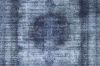
Arctic designs use cool colours: grey, white and ice blue.
The patterns are barely visible, often only hinted at, with a calm, structured feel.
The result is an understated rug with a clean, defined look. Paired with wood or glass, it feels particularly fresh and orderly.
Tip : Ideal for hallways, kitchens or light, airy, Scandinavian-inspired rooms.
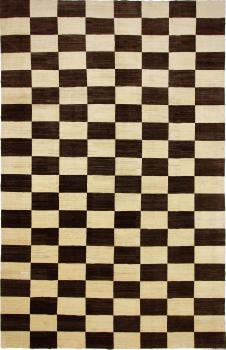
These rugs combine graphic design with machine weaving.
The result is an even, flat weave with clearly defined patterns, often featuring grids, waves or large areas of colour. The construction is robust, with a modern look.
Tip : Ideal for home offices, studios or living spaces with modern art and clean architectural lines.
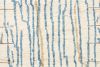
Naturescene Gabbeh rugs depict landscapes, skies and trees in abstract rather than realistic forms.
The patterns look as though they have been dabbed on, with an almost impressionistic feel. The colours are soft: moss green, sky blue and ochre. A deep pile and loose knotting give these rugs a cosy feel.
Tip : Well suited to living rooms with natural materials or large windows, and quiet retreats with views of greenery.
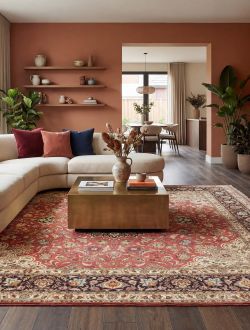
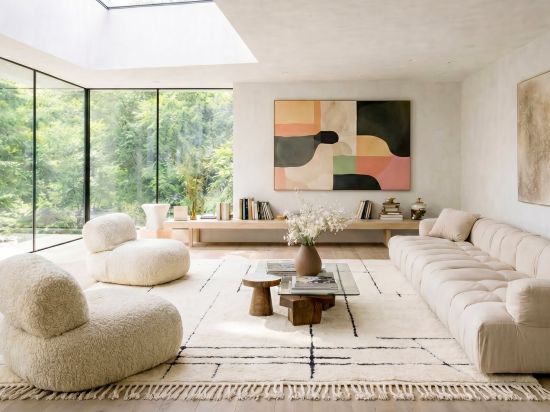
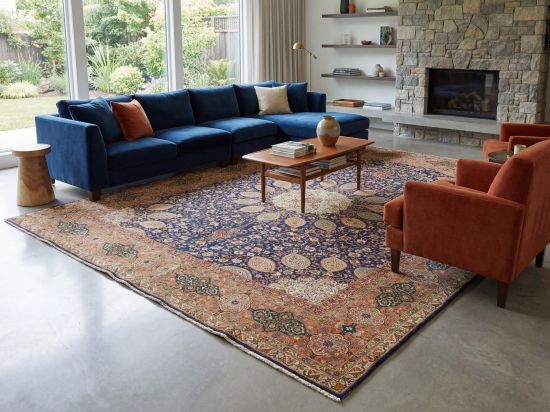
Gabbeh rugs are versatile. Depending on the type and design, they can work well in a range of rooms:
| Room | Recommended size |
|---|---|
| Living room | 200 × 300 cm or larger |
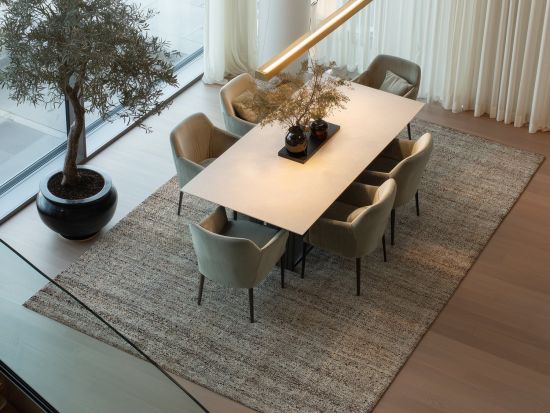
| Dining area | 200 × 250 cm or 250 × 300 cm |
| Bedroom | 170 × 240 cm or 200 × 300 cm |
| Hallway / entrance area | 80 × 200 cm or 100 × 300 cm |
| Children's room | 120 × 180 cm or 140 × 200 cm |
| Home office / study | 140 × 200 cm or 160 × 230 cm |
Yes, Gabbeh rugs made from high-quality virgin wool are durable and easy to care for. Natural wool fibres can absorb less dirt and fewer odours than many synthetic materials.
High-quality Gabbeh rugs are often coloured with natural dyes. With normal use, they retain their colours for many years. However, prolonged exposure to direct sunlight should be avoided.
Wool can trap dust, which may help improve air quality. Regular vacuuming also helps reduce allergens.
Each rug is made entirely by hand, a process that can take several months. High-quality natural materials also contribute to the quality, durability and individual character of every rug.
The most popular colours include beige, cream, grey, red, blue and natural tones, as they work well with a range of interior styles.